Phuket Attractions Guide 2026: Big Buddha, Promthep Cape and Phi Phi Explained
Phuket sits in the Andaman Sea off southern Thailand, covers about 543 square kilometres and is the country's largest island. Travellers who want the Big Buddha, the beaches and the islands in one trip should allow 4 to 5 days; the airport to Patong Beach takes about 45 minutes by road.
The sights fall into three clusters. The west coast is a 35 km run of beaches from Nai Yang in the north to Nai Harn in the south. The southern tip packs the Big Buddha, Wat Chalong and Promthep Cape within 20 minutes of each other. The east side holds Phuket Town and the piers where island trips depart. The island measures about 48 km north to south.
Dry and rainy seasons: November to April is the stable window
The dry season runs November to April, with daily highs around 32°C and calm seas. The rainy season runs May to October; afternoon storms are common and red flags go up on west-coast beaches when swell passes 2 metres. The Similan Islands open mid-October to mid-May and close the other 5 months, so check the Thai national park authority notices for current status.
Three routes: 45 km south loop, 25 km west coast, 1.5 km old town
The south loop links the Big Buddha, Wat Chalong, Promthep Cape and Nai Harn over about 45 km, with 10 to 20 minutes between stops. The west coast strings together Nai Yang, Kamala, Patong, Karon and Kata — 5 beaches over about 25 km. Phuket Old Town covers a walkable 1.5 km and sits about 25 minutes from Chalong Pier.
Dress codes and a 2,000 baht smoking fine
The Big Buddha and Wat Chalong require covered shoulders and knees; a cover-up over swimwear does not qualify, and the Big Buddha lends sarongs free. Beaches have no dress code, but smoking on public beaches has been banned since 2017 with fines up to 2,000 baht, and designated areas sit about 10 metres back from the sand. Penalties vary by local notice.
Getting around Phuket: transport options and costs
Phuket has no rail network, so sights are linked by charter cars, taxis, scooters and tuk-tuks. The airport bus costs 100 baht one way and takes about 2 hours to Patong; a taxi over the same stretch runs about 800 baht in 45 minutes. Fares move with the season, so confirm before you ride.
Full-day charter: 1,200 to 2,500 baht for 8 hours
A full-day charter covers about 8 hours at 1,200 to 2,500 baht depending on vehicle and whether fuel is included. The 4-stop south loop covers about 45 km and gives the best value, working out at roughly 300 to 625 baht each for 4 people. Quotes usually exclude entry fees and the driver's meals, so check what is included.
Scooter rental: from 250 baht a day, licence required
Scooters rent for 250 to 350 baht a day, with 10 to 15% off for 3 days or more. Police run routine checks on the Patong and Kata roads; riding without an international permit draws a fine of about 500 baht and most policies exclude unlicensed riders. Deposits are typically 3,000 baht or a passport, so confirm the policy and deposit terms before renting.
Tuk-tuks and taxis: 300 to 600 baht over 8 km
Patong to Kata is about 8 km; tuk-tuks typically quote 400 to 600 baht and metered taxis about 300 baht. Tuk-tuks rarely use meters and a 100 baht surcharge after 22:00 is common. Agree the fare before boarding and use a ride-hailing app quote as your benchmark.
Piers: Chalong and Rassada serve different routes
Chalong Pier serves Phi Phi, Coral Island and Racha Island; Rassada Pier handles the large Phi Phi ferries and Krabi routes. Speedboats reach Phi Phi in about 50 minutes, large ferries in about 2 hours. Meeting times fall between 07:30 and 08:30; confirm the pickup window and hotel coverage with your operator.
The 12 Phuket attractions worth your time in 2026
These are grouped into the south loop, the west-coast beaches and the islands, with entry fees and drive times for each. Fees and hours can change, so confirm with each site before visiting.
Big Buddha: the 400-metre hilltop landmark
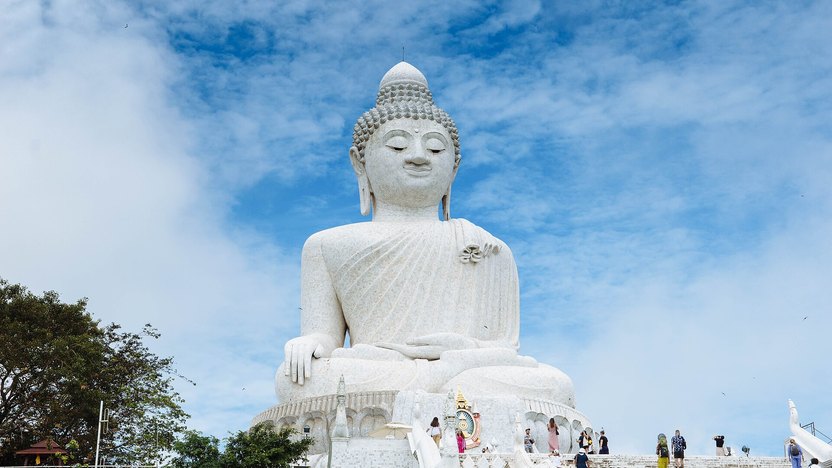
The Big Buddha sits on Nakkerd Hill, stands 45 metres tall and is faced in Burmese white jade marble, making it the island's highest man-made landmark; on clear days it overlooks Chalong Bay and Kata Beach. There is no entry fee, donations are voluntary, and the walk from the car park takes about 3 minutes.
The access road climbs about 6 km with tight bends and no lighting, so riding up after 18:30 is not advised. Opening hours run roughly 06:00 to 18:30 and shift for religious events, so confirm on site. Wat Chalong is 15 minutes away, making this a natural first stop.
Wat Chalong: a 60-metre pagoda and the island's largest temple
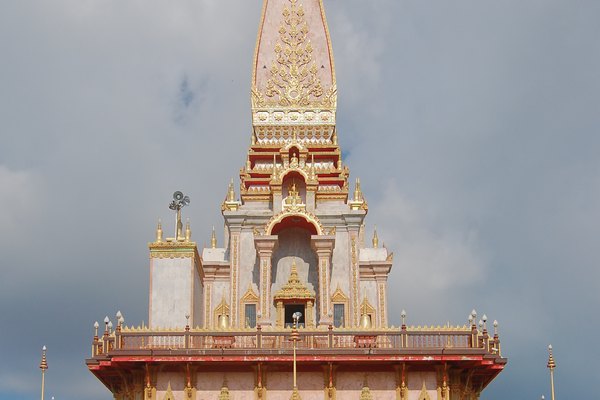
Wat Chalong is the largest temple on Phuket. Its 3-storey pagoda rises 60 metres and houses a relic of the Buddha, with a top terrace looking out over Chalong Bay. The Luang Pho Chaem hall displays wax figures and documents the tin miners' uprising of 1876. Entry is free.
Photography is not allowed inside the main pagoda and some halls require removing shoes. Hours run roughly 07:00 to 17:00 and crowds concentrate between 09:00 and 11:00 on festival days; confirm current hours on site. The Big Buddha is 15 minutes away.
Promthep Cape: the island's best-known sunset spot
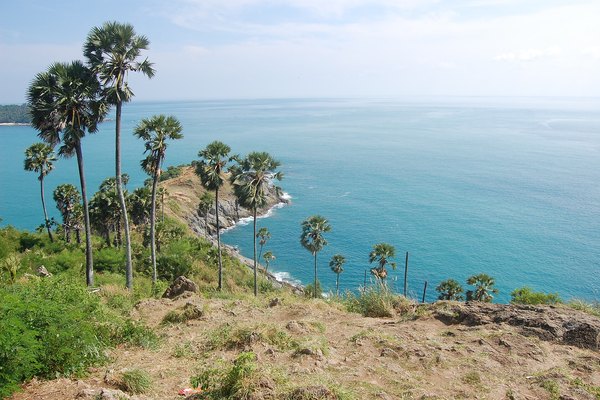
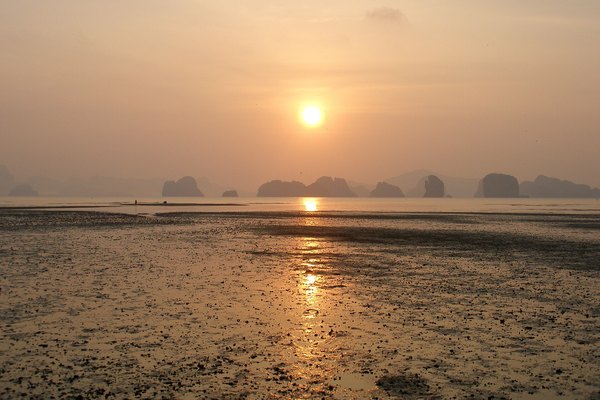
Promthep Cape marks Phuket's southern tip and is the island's best-known sunset viewpoint, with a lighthouse museum and a terrace that takes in Nai Harn Beach and Coral Island. Both the terrace and the museum are free, and the car park holds about 80 vehicles.
Arriving 60 minutes before sunset usually secures a front-row spot, and the car park backs up after about 17:00 in high season. Sunset falls between 18:10 and 18:50 by month, so check the time for your date. Above 10 metres per second the terrace edge gets slippery. Best saved for last on the south loop.
Patong Beach: 3 km with the densest facilities
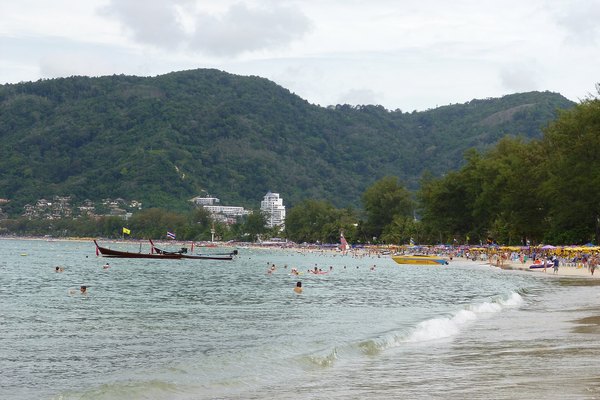
Patong Beach runs about 3 km and concentrates the island's hotels, restaurants and nightlife; Bangla Road behind the sand closes to traffic after 18:00. The beach is free to enter and an umbrella-and-lounger set runs 200 to 300 baht, agreed on the spot.
Red flags go up and swimming is banned when swell exceeds 2 metres, and rip currents cause incidents every rainy season. Jet skis run about 1,500 baht for 30 minutes and parasailing about 1,000 baht per flight, both negotiated on the beach; confirm whether insurance is included. Suits first-time visitors.
Kata Beach: 1.5 km and the island's surf starter
Kata Beach runs about 1.5 km with finer sand than Patong and fewer people. From May to September the southwest monsoon holds swell steady at 1 to 2 metres, making it Phuket's surf starter. Entry is free and boards rent for 300 to 500 baht a day.
Lessons run about 1,000 to 1,500 baht an hour; confirm current rates with each shop. Red flags go up in heavy rainy-season swell, and the rocky southern end cuts feet at low tide, so wear water shoes. Kata Noi to the north is quieter but has only about 10 places to eat.
Karon Beach: 3.5 km and the island's longest sand
Karon Beach stretches about 3.5 km, the longest single beach on Phuket. Because the hinterland is wide and hotel density low, it feels noticeably emptier than Patong over the same distance. Entry is free and the fine white sand squeaks underfoot.
The seabed drops away sharply, reaching clear depth about 20 metres out, so it does not suit small children. Dining is limited to about 20 places, most closing by 21:00, and a change of scene means 15 minutes to Patong; confirm hours with each venue. Best for a quiet base.
Nai Harn Beach: a sheltered bay ringed by hills
Nai Harn Beach occupies a half-enclosed bay with hills on three sides, so swell is markedly gentler than on the west coast and swimming often stays possible through the rainy season. Entry is free and the lagoon beside it makes a 1.2 km loop on foot.
Parking holds about 40 vehicles and fills after 10:00 in high season. A yacht channel crosses the bay, so stay clear of the marked lane when swimming. Promthep Cape is 10 minutes away; check on-site signage for current swimming restrictions.
Phuket Old Town: 1.5 km of Sino-Portuguese shophouses
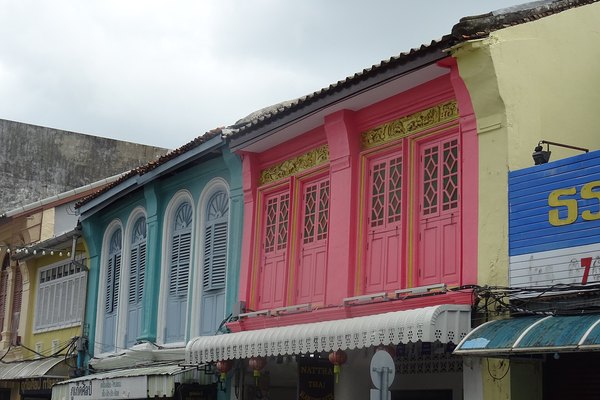
Thalang Road and Phang Nga Road preserve Sino-Portuguese shophouses from the 19th-century tin-mining era across a walkable 1.5 km, most of them 2 storeys with arcades and shutters. The streets are free to wander and about 60 units now hold cafés and boutiques.
Thalang Road closes for a walking market on Sundays from 16:00 to 22:00; on weekdays most shops shut by 18:00, so confirm hours with each one. Many shophouses are private homes, so avoid stepping into doorways to photograph. Chalong Pier is 25 minutes away.
Phi Phi: 50 minutes by speedboat, the main island route
Phi Phi comprises Phi Phi Don and Phi Phi Leh, about 50 minutes from Phuket by speedboat, and is the primary island-hopping destination. Maya Bay closed for recovery in 2018, reopened in 2022 and now runs a visitor cap of about 4,125 people a day.
The islands sit inside a national park with a 400 baht fee that most tours exclude and collect on the day; check the national park authority notice. Swimming and mooring are banned at Maya Bay. Some rainy-season departures are cancelled, so plan a full day and skip land sights.
Phang Nga Bay: 40 limestone islands and sea-kayak routes
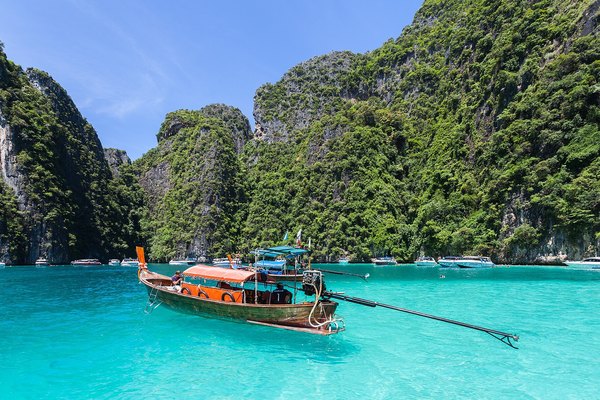
Phang Nga Bay holds about 40 limestone islands and earned its "James Bond Island" nickname from a 1974 film. Water in the bay is mostly under 5 metres with little swell, making it the main sea-kayak area for cave routes. A 300 baht national park fee applies.
Most tours include kayaking and lunch; confirm whether the 300 baht fee is included. Some caves are passable only at low tide, so routes shift with the day's tides, and there is little shade at midday. Transfers run about 1.5 hours each way, which suits families avoiding open water.
Racha Island: the nearest island, 30 minutes out
Racha Island lies about 30 minutes from Chalong Pier by speedboat, making it the closest popular island. Two main beaches sit either side of a ridge, about 15 minutes apart on foot. Half-day trips including transfer and snorkel gear run 1,000 to 1,800 baht.
Confirm the current rate on your booking platform. There is no public transport; moving between beaches means walking or paying about 200 baht for a shuttle. Food is confined to resorts at higher prices, so carry 2 litres of water. Rainy-season schedules shift, so reconfirm the day before.
Promthep Lighthouse Museum: 3 floors at the island's southern high point
The Promthep Lighthouse Museum stands at the cape's tip under Royal Thai Navy management, with 3 floors of navigation instruments and lighthouse history and a top terrace about 50 metres above the sea. Entry is free.
Hours run roughly 10:00 to 18:00; confirm on site. The internal stairs are about 80 cm wide with no lift, and queues of 20 minutes are common before sunset in high season. The terrace is small and windy, so large tripods are impractical. It is 5 minutes from the viewpoint.
Phuket FantaSea: an evening show with dinner
Phuket FantaSea sits beside Kamala Beach on about 60 rai, with a main show running about 70 minutes. Show-plus-buffet tickets run 1,800 to 2,500 baht and show-only about 1,500 baht, priced by seating zone.
Confirm prices and showtimes on the official site, and check whether transfers are included. Photography is banned inside the theatre and seating takes about 60 minutes before showtime. Patong is about 20 minutes away, which makes this a good final evening.
What Phuket's attractions cost: fees and passes
Most land sights are free, so the real spend is transport and boat trips. The ranges below are typical across booking platforms; prices move with season and exchange rates, so confirm the live rate before booking.
Land sights: 5 main attractions charge nothing
The Big Buddha, Wat Chalong, the Promthep Cape terrace, the lighthouse museum and Phuket Old Town — 5 main sights in total — charge no entry fee, with voluntary donations at the temples. The cost is transport: a south-loop charter at 1,200 to 2,500 baht works out at roughly 300 to 625 baht each for 4 people. Confirm the rate with the operator before you book.
Park fees: 400, 300 and 500 baht, usually excluded
Phi Phi costs 400 baht, Phang Nga Bay 300 baht and the Similans 500 baht. All 3 are normally excluded from tour prices and collected on the day. When booking, confirm whether the park fee, lunch and hotel transfer are included — those 3 items drive most of the price difference — and check the national park authority notice.
Where to stay near Phuket's attractions
Your base decides your drive times: west-coast beaches mean Patong or Kata, the south loop and island trips mean Chalong or Rawai, and the old town means Phuket Town. The island runs about 48 km north to south, so crossing it often takes over 60 minutes one way.
Patong: the most facilities and the most noise
Patong concentrates the island's dining and nightlife, with the beach and Bangla Road about 5 minutes on foot and the highest density of convenience stores. The downside is street noise: rooms facing Bangla Road still carry sound at 02:00, though this depends on floor and orientation, so check the room position when booking. Best for first-timers without a car.
Kata and Karon: quieter, with fewer dinner options
Kata and Karon have good sand and lighter crowds, and rooms often run about 20% below Patong for the same class. Dining clusters on the main street and winds down after 21:00, so a change of scene means about 15 minutes to Patong; confirm hours with each venue. Best for a beach-and-rest trip.
Chalong and Rawai: fastest for island days
Chalong and Rawai sit near the pier and the south loop. Island trips meet around 07:30, and staying here saves about 40 minutes of transfer time; confirm pickup times with your operator. The beaches here are not suited to swimming and dining is limited to about 30 venues. Best for island-focused trips.
Booking timing: 30 days ahead in the dry season
November to February is high season and rooms in popular beach areas tighten about 30 days out, with Lunar New Year and Christmas rates reaching double the rainy-season level. Rainy-season rates drop noticeably but boat schedules are less reliable, so leave 1 spare day if your plan includes islands. Confirm live rates on your booking platform.
FAQ
Q. When is the best time to visit Phuket's attractions?
November to April is the dry season, with calm seas and reliable boat departures. May to October brings afternoon showers and some island trips are cancelled. Several Andaman national park islands close during the rainy season, so check the Thai national park authority notices before you go.
Q. Is there an entry fee for the Phuket Big Buddha?
No fee is charged and donations are voluntary. Opening hours are roughly 06:00 to 18:30, shoulders and knees must be covered, and sarongs are lent free of charge. Hours can change for religious events, so confirm on site.
Q. How much does a Phi Phi day trip cost?
Speedboat group tours run about 1,200 to 2,200 baht per person, plus a 400 baht national park fee usually collected separately on the day. Prices move with the season and boat type, so confirm whether the park fee and hotel transfer are included before booking.
Q. What is the cheapest way to move between Phuket's sights?
There is no rail network, so visitors rely on charter cars, taxis and rented scooters. A full-day charter runs 1,200 to 2,500 baht and scooters 250 to 350 baht per day. Tuk-tuks start around 200 baht for short hops; agree the fare before you get in.
Q. How early should I arrive at Promthep Cape for sunset?
Arriving 60 minutes before sunset usually secures a front-row spot, and the car park starts backing up after about 17:00 in high season. Sunset falls between 18:10 and 18:50 depending on the month, so check the time for your date.
Q. How many Phuket attractions fit into one day?
The south loop (Big Buddha, Wat Chalong, Promthep Cape, Nai Harn) sits close together, so four stops in a day is comfortable. On an island-hopping day, do not add land sights: boats often return to port after 16:30.