Bangkok Temples Guide 2026: The Grand Palace, Wat Pho and Wat Arun Explained
Bangkok's temples concentrate in Rattanakosin, the old town on the east bank of the Chao Phraya. The 3 core structures built after the capital moved here in 1782 — the Grand Palace, Wat Pho and Wat Arun — still stand within a 2.5 km walk of each other. First-time visitors can cover the main route in 1 day, or 2 days with the Golden Mount and the Golden Buddha added.
The old-town temples form 3 rings. The first is the Grand Palace and Wat Pho, 10 minutes apart on foot. The second crosses the river to Wat Arun, a 3-minute ferry. The third runs east to the Golden Mount, Wat Suthat and Loha Prasat, all within 10 minutes of each other by road. No rail line serves the district directly; MRT Sanam Chai is the only station close by.
2026 tickets and hours: 1,000 baht for the three temples
The Grand Palace costs 500 baht and opens 08:30 to 15:30; Wat Pho costs 300 baht and opens 08:00 to 18:30; Wat Arun costs 200 baht and opens 08:00 to 18:00. The three total 1,000 baht and there is no combined ticket. The Golden Mount costs 100 baht, the Marble Temple 50 baht and the Golden Buddha 100 baht. Prices and ticketing cut-offs can change, so confirm each temple's official notice.
The three-temple route: 1.9 km on foot plus a 3-minute ferry
The Grand Palace to Wat Pho runs about 900 metres and 12 minutes along Maha Rat Road; Wat Pho to Tha Tien ferry pier is 450 metres and 6 minutes; the crossing takes 3 minutes at about 5 to 10 baht and lands at Wat Arun. Total walking comes to about 1.9 km, and going in that direction avoids backtracking. Confirm fares against the pier notice.
Dress code: shoulders and knees covered, strictest at the Grand Palace
All 3 temples require covered shoulders and knees, and sleeveless tops, shorts, cropped ripped trousers and skirts above the knee are turned away. The Grand Palace runs 2 checkpoints at the entrance and lends cover-ups against a deposit of about 200 baht, while Wat Pho and Wat Arun rent sarongs at about 50 baht. Shoes come off in the halls, where pointing the soles of the feet at an image is prohibited. Confirm the current rules on site.
Reaching the old-town temples: 4 options and what they cost
The old town has no BTS coverage, so access runs on the MRT Blue Line, Chao Phraya boats, taxis and ride-hailing. Peaks fall between 07:30 and 09:30 and 17:00 and 19:30, when surface traffic is slowest, so allow 60 minutes for cross-city hops. Confirm fares against current station notices.
MRT Sanam Chai: 5 minutes on foot to Wat Pho
Exit 1 at Sanam Chai leaves 450 metres and about 5 minutes to Wat Pho, or 1.1 km and 15 minutes to the Grand Palace. From the Siam area the MRT takes about 25 minutes in total for about 42 baht. The station interior is themed on old-town architecture and is the only one on the line inside a heritage district. Confirm fares at the station.
Chao Phraya boats: 16 baht orange flag, 150 baht day pass
The orange-flag express boat costs about 16 baht a trip, calling at 20 piers at 10 to 20-minute headways; the blue-flag tourist boat costs about 30 baht a trip or about 150 baht for a day pass, calling at 9 main piers. Tha Chang serves the Grand Palace and Tha Tien serves Wat Pho. Last boats mostly fall around 18:00, so confirm fares and headways against pier notices.
The river crossing: Tha Tien to Wat Arun in 3 minutes
The cross-river ferry from Tha Tien to Wat Arun takes 3 minutes at about 5 to 10 baht, running roughly 06:00 to 21:00 at 10-minute headways. The booth takes cash only and charges per crossing. Floating pontoons sit at a steeper angle at low tide, so watch the plank when boarding. Confirm fares and operating hours against the pier notice.
Taxis and tuk-tuks: 60 to 150 baht within the old town
Metered taxis start at 35 baht and short hops inside the old town mostly run 60 to 150 baht. Tuk-tuks do not use meters and typically ask 150 to 300 baht for the same hop, so confirm the fare before boarding. Tuk-tuks at temple gates commonly open with "200 baht for the whole day" and then divert to gem or tailor shops, so a ride-hailing app's live quote is the better benchmark.
The 10 Bangkok temples worth your time in 2026
These are ordered by the 3 old-town rings, each with its entry fee and walking distance. Fees and hours can change, so confirm each temple's official notice.
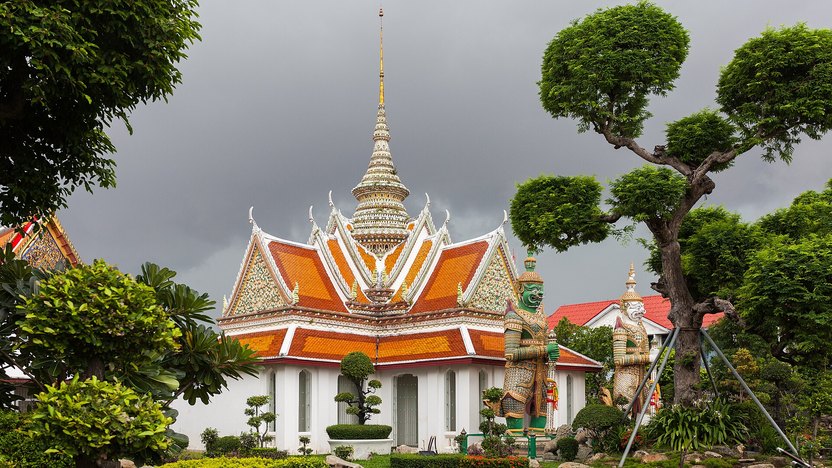
The Grand Palace and the Emerald Buddha: 218,000 square metres of royal architecture
The Grand Palace was built in 1782 when the capital moved here, covering about 218,000 square metres behind a wall some 1,900 metres long, and remains the venue for royal ceremonies. The Emerald Buddha inside stands about 66 cm, carved from a single block of jade, and is robed 3 times a year with the seasons. Entry costs 500 baht.
Hours run roughly 08:30 to 15:30 and ticket sales usually stop 30 minutes earlier. Photography is barred inside the Emerald Buddha hall and shoes come off, while the forecourt has no shade and ground temperatures can pass 40°C at midday in April. It works best as the day's first stop, for about 90 minutes. Confirm current hours against the official notice.
Wat Pho: a 46-metre reclining Buddha and over 1,000 images
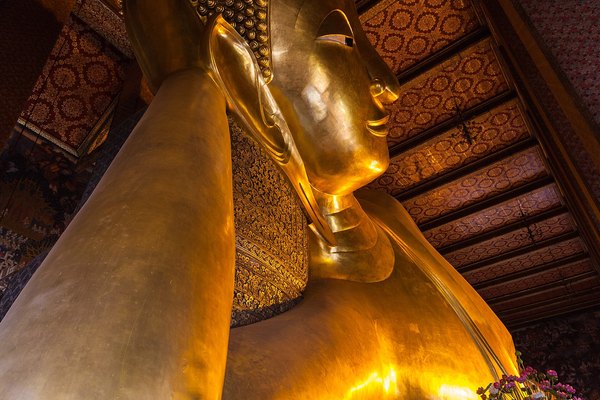
The reclining Buddha at Wat Pho measures 46 metres long and 15 metres high, finished in gold leaf, with 108 auspicious scenes inlaid in mother-of-pearl across the soles, each foot about 5 metres long. The temple also holds 91 stupas and more than 1,000 images, the largest count in Bangkok. Entry costs 300 baht including a bottle of water.
Hours run roughly 08:00 to 18:30. The Thai massage school here is the country's oldest teaching site, with 1-hour treatments at about 420 to 520 baht and waits of about 30 minutes on the day. Confirm prices and courses against the school's notice on site. The Grand Palace is 12 minutes on foot.
Wat Arun: an 82-metre prang faced in ceramic fragments
The main prang at Wat Arun stands about 82 metres, its outer surface set with imported Chinese ceramic fragments and shells, making it the tallest landmark on the river's west bank. Stairs climb all 4 faces to a platform at roughly half height, looking back across to the Grand Palace. Entry costs 200 baht.
Hours run roughly 08:00 to 18:00. The stairs are about 40 cm wide and steep, turn slippery after rain, and are best descended sideways. The 60 minutes before sunset give the weakest backlight across the water, and the forecourt is busiest then. Confirm current hours on site.
The Golden Mount: 344 steps on a spiral ramp
The Golden Mount sits on the old town's only artificial hill, reached by 344 steps on a spiral ramp, with a stupa about 58 metres high and a top terrace looking across the old town to the Mahanakhon tower in the distance. Shaded rest points sit every 50 steps. Entry costs 100 baht.
Hours run roughly 07:30 to 19:00. The temple fair in mid-November runs about 9 days, when stalls outside the gate extend 300 metres and the climb queues for 20 minutes or more after dark. There is no lift, so the climb does not suit troublesome knees. Confirm fair dates and hours against the temple notice.
The Marble Temple: Italian marble, completed in 1899
The Marble Temple was completed in 1899 with Italian Carrara marble on the main hall's exterior, making it the only large all-white temple in Bangkok, and its cloister displays 52 reproductions of images from across the region. Eight bodhi trees stand in the forecourt. Entry costs 50 baht.
Hours run roughly 08:00 to 17:30. Monks commonly chant between 06:00 and 07:00 and photography is barred inside the hall. It is about 12 minutes by road from the Grand Palace and over 2 km on foot from the nearest BTS station, so it suits an old-town charter route. Confirm current hours on site.
The Golden Buddha: a 5.5-tonne solid gold image
Wat Traimit holds a solid gold Buddha about 3 metres high and weighing about 5.5 tonnes, a 13th-century Sukhothai work discovered in 1955 when the plaster covering it broke away during a move. The image hall costs 100 baht, with the Chinatown heritage centre alongside charging about 40 baht.
Hours run roughly 08:00 to 17:00. The image hall is on the 4th floor with a lift, and the one-way route takes about 20 minutes. The entrance to Yaowarat Road is directly outside, so Chinatown follows naturally. Confirm prices and hours against the temple notice.
Wat Suthat and the Giant Swing: 21-metre teak posts
The main hall at Wat Suthat stands about 32 metres, and its murals cover all 4 walls, the largest painted area of any Bangkok temple. The Giant Swing in front was erected in 1784 for a Brahmin ceremony, and the surviving posts stand about 21 metres; the ceremony ended in 1935 and the structure remains as a landmark. Entry costs 100 baht.
Hours run roughly 08:30 to 21:00, making it one of the few old-town temples open into the evening. Traffic around the swing's roundabout is dense, so stay on the pavement when photographing. The Golden Mount is about 900 metres and 12 minutes on foot. Confirm current hours on site.
Loha Prasat: a tiered tower with 37 metal spires
Loha Prasat stands inside Wat Ratchanatdaram as a 3-tier square tower topped by 37 metal spires at about 36 metres, a form with no other example in Thailand. A central spiral stair climbs to the top, where the terrace faces the Giant Swing and the Golden Mount. Entry costs about 20 baht.
Hours run roughly 08:00 to 17:00. The internal passages are about 1.2 metres wide with natural ventilation and are most stifling between 13:00 and 15:00. The surrounding Buddhist-supply market has about 40 shops, most closing before 17:00. Confirm prices and trading hours on site.
Wat Paknam: a 69-metre Buddha and a glass stupa
Wat Paknam sits in the Phasi Charoen district on the west bank, where the top dome of a 5-tier glass stupa carries a cosmological painting in green glass, with a seated Buddha about 69 metres high alongside, the tallest image in the city. Entry is free, with voluntary donations.
Hours run roughly 08:00 to 18:00. The top level has a lift limited to 8 people a trip, which queues about 20 minutes at weekends. MRT Bang Phai is about 15 minutes and 1.1 km on foot. Shoes come off inside and tripods are barred. Confirm current hours against the temple notice.
The Erawan Shrine: a central shrine open from 06:00
The Erawan Shrine stands at the Ratchaprasong junction, established in 1956, and is the busiest shrine in central Bangkok, open 06:00 to 22:00 with free entry. Garland and incense sets run about 50 to 150 baht, and Thai dance offerings are performed at set times each day.
BTS Chit Lom is about 2 minutes and 200 metres away, the easiest access among these 10 temples. The shrine occupies only about 400 square metres and is most congested after 19:00. Confirm offering prices as posted on site and avoid buying from touts outside the grounds.
What Bangkok's temples cost: tickets and rentals
Spending splits into 3 categories: tickets, rentals and guiding. The ranges below are typical and move with the season, so confirm at each temple's ticket office before buying.
Tickets: 1,000 baht for the big three, about 1,370 baht for all 10
The Grand Palace costs 500 baht, Wat Pho 300 baht and Wat Arun 200 baht, totalling 1,000 baht. Adding the Golden Mount at 100 baht, the Marble Temple at 50 baht, the Golden Buddha at 100 baht, Wat Suthat at 100 baht and Loha Prasat at 20 baht brings all 10 to about 1,370 baht; Wat Paknam and the Erawan Shrine are free. Confirm prices against each temple's notice.
Rentals and guiding: sarongs 50 baht, audio guides 200 baht
Cover-ups are lent against a deposit of about 200 baht and sarongs rent for about 50 baht, with the deposit returned on handover. The Grand Palace audio guide costs about 200 baht, covers Chinese and is hired for 2 hours against ID. On-site human guides mostly run 400 to 800 baht and are negotiated, so book at the official counter rather than accepting touts at the gate. Confirm rental costs and deposits against each temple's notice.
Where to stay for Bangkok's temples: picking a zone by route
The zone decides what time the gates can be reached: the old town for the first entry at 08:00, Siam or Sukhumvit to combine shopping with transport, the riverside for river views. The old town to Siam takes about 25 minutes, stretching to 45 at peak, so confirm drive times against the day's traffic.
Rattanakosin: shortest walk to the gates
Old-town lodging is mostly converted houses of 3 floors or fewer and small hotels, 10 to 15 minutes on foot from the Grand Palace and Wat Pho, which avoids the morning traffic. The trade-offs are no BTS coverage, about 30 places to eat in the evening with most closing by 21:00, and few convenience stores; confirm hours with each venue. It suits heritage-focused stays of 2 nights or fewer.
Siam and Sukhumvit: best for interchanges and food
Siam is the only crossing of the two BTS lines, with 4 malls within a 10-minute walk, while Asok in Sukhumvit connects to the MRT Blue Line and sits about 25 minutes from the old town. Both zones have the city's highest density of restaurants and 24-hour convenience stores. The trade-off is one change to reach the old town and slow surface traffic at peak. Confirm live rates on your booking platform.
Timing: enter at 08:00, avoid the 10:00 group peak
The Grand Palace opens at 08:30, and arriving before 08:00 usually places you in the first 50, with checks and ticketing taking about 15 minutes in total. Tour groups concentrate from 10:00 to 13:00, when the gate often queues for over 20 minutes. Wat Pho and Wat Arun stay open past 18:00, which suits the afternoon. Confirm hours against each temple's notice.
Climate and kit: 40°C at midday, carry 1.5 litres of water
March to May is the hot season, when ground temperatures can pass 40°C at midday and temple courtyards mostly have no shade, so 1.5 litres of water per person is the baseline. In the May to October rainy season afternoon storms concentrate between 15:00 and 18:00 and stone paving turns slippery. Shoes come off indoors, so slip-on styles and a cloth bag to carry them help. Check the day's rain forecast before setting out.
FAQ
Q. Do Bangkok's three main temples fit into one day?
Yes. The Grand Palace, Wat Pho and Wat Arun sit within 2.5 km of each other and link up on foot plus a ferry. Starting at 08:00 with 90, 60 and 60 minutes at each and a 3-minute crossing between leaves room for lunch. Ticket hours can change, so confirm each temple's official notice.
Q. What is the dress code at Bangkok's temples?
Shoulders and knees must be covered throughout; sleeveless tops, shorts, ripped trousers and short skirts are all turned away at the gate. The Grand Palace checks most strictly and lends cover-ups against a deposit of about 200 baht, while Wat Pho and Wat Arun rent sarongs at about 50 baht. Confirm the current rules on site.
Q. Is there a combined ticket for the three temples?
No, each is bought separately. The Grand Palace costs 500 baht including the Emerald Buddha temple, Wat Pho 300 baht including a bottle of water, and Wat Arun 200 baht, for a total of 1,000 baht. Prices are revised, so confirm at each ticket office before buying.
Q. When are the old-town temples least crowded?
Between 08:00 and 09:30 and after 15:30 are thinner, with tour groups concentrated from 10:00 to 13:00, when the Grand Palace gate often queues for over 20 minutes. Grand Palace ticket sales mostly stop at 15:30, so Wat Pho and Wat Arun suit the afternoon. Confirm hours on site.
Q. Someone at the gate says it is closed today — is that true?
The Grand Palace opens year-round and closes only in part during royal ceremonies. Being told "closed today, let me take you to another temple" and then driven to a gem shop is a known approach. Walk to the official ticket booth to confirm, and do not buy from roadside sellers or accept booking on your behalf.
Q. What is the fastest way from Siam to the old-town temples?
The MRT Blue Line to Sanam Chai takes about 25 minutes for about 42 baht, with Wat Pho 5 minutes on foot from the exit. The alternative is the BTS to Saphan Taksin and a Chao Phraya boat, about 30 minutes. Confirm fares and boat times at the station.